Drew Franke · 11 September 2026
The Evolution of After-Hours Retail Patterns in Niche Digital Marketplaces
After-hours retail in niche digital marketplaces has shifted from sporadic late-night logins to structured patterns driven by global time zones, mobile access, and specialized platform features, with data from sources like the US Census Bureau showing e-commerce activity extending well beyond traditional business hours in categories such as collectibles, digital assets, and hobbyist goods. Platforms operating in these spaces now record peak transaction volumes between 10 PM and 4 AM in multiple regions, reflecting how users align shopping with personal schedules rather than store openings.
Foundations of Extended-Hour Digital Shopping
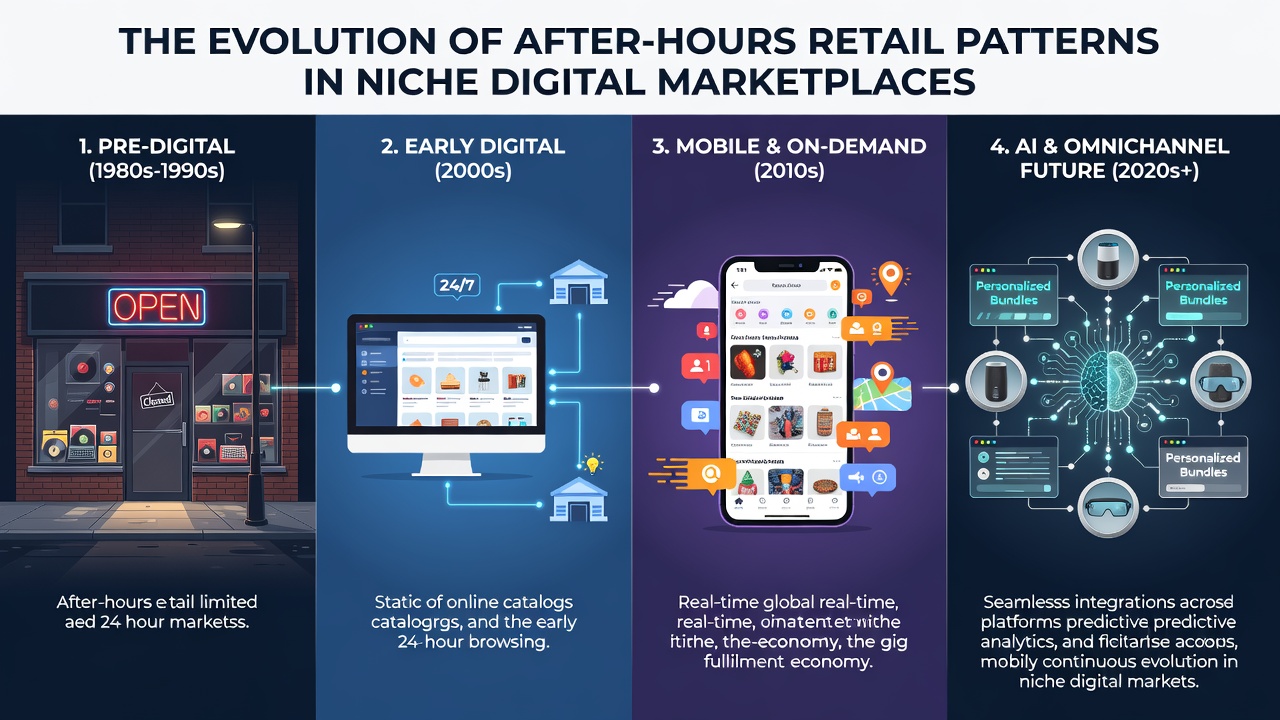
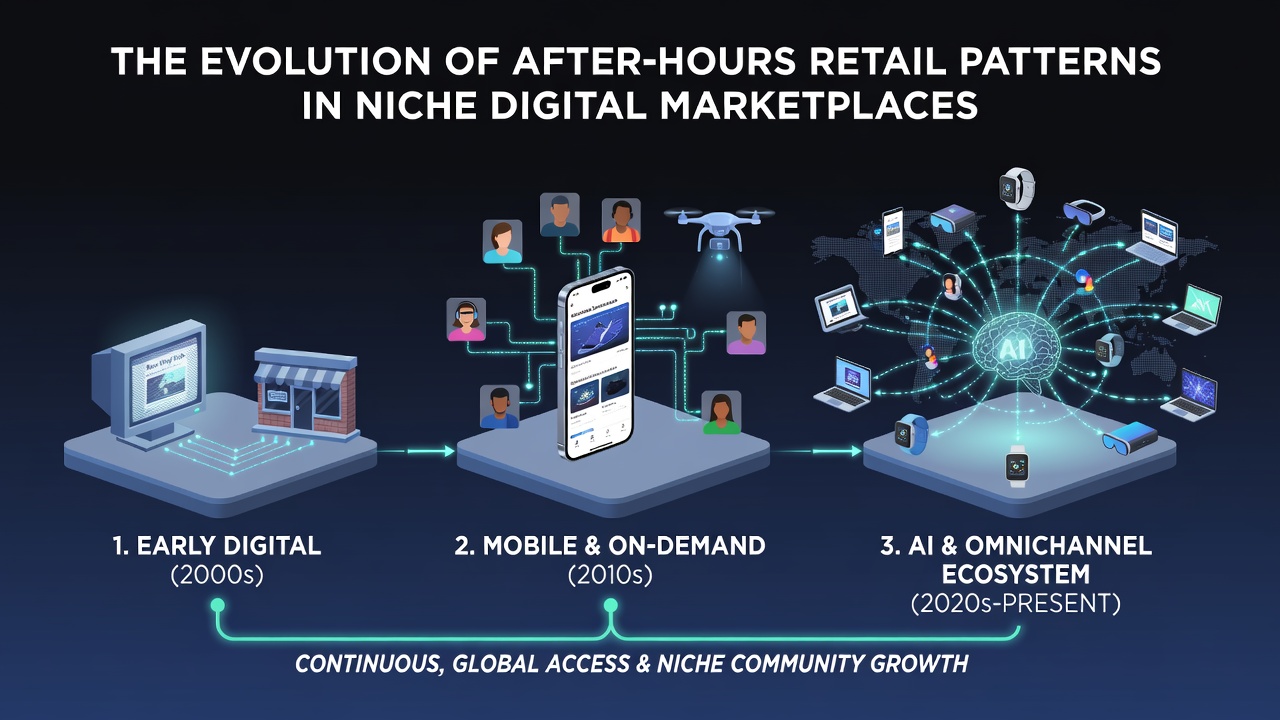
Early niche marketplaces emerged in the late 1990s with auction sites that supported asynchronous bidding, allowing participants in different continents to place offers at any hour without real-time coordination, and this capability laid groundwork for later after-hours growth. By the mid-2000s, specialized forums and early digital goods platforms introduced automated matching systems that processed orders overnight, reducing the need for sellers to remain online continuously while still capturing demand from night-shift workers and international buyers.
Those who studied these initial systems found that transaction logs often clustered around midnight in the platform's primary timezone, yet activity persisted across all 24 hours due to overlapping user bases in Asia, Europe, and the Americas. Research indicates that mobile adoption accelerated this trend after 2010, as smartphone apps enabled push notifications for new listings and bids, prompting immediate responses regardless of local time.
Current Patterns and Data Trends
Contemporary niche marketplaces exhibit distinct after-hours rhythms where activity in categories like vintage electronics, rare books, and limited-edition digital art spikes during evening hours in one region while daytime peaks occur elsewhere. Figures reveal that a significant portion of purchases in these segments complete between 8 PM and 2 AM local time for the buyer, supported by features such as scheduled auctions and escrow services that operate continuously.
One study from academic researchers at institutions tracking e-commerce behavior documented how users in Australia and Canada frequently engage with US-based niche platforms during their own late evenings, creating sustained volume outside standard retail windows. Data shows integration with payment processors that handle authorizations around the clock further enables this pattern, with settlement batches running multiple times daily to accommodate global participation.
Technological Drivers Behind the Shift
Algorithmic recommendation engines now analyze historical after-hours behavior to surface relevant items at optimal times for individual users, increasing completion rates for transactions initiated outside conventional hours. Artificial intelligence tools for inventory matching and fraud detection function without downtime, allowing platforms to maintain trust during periods when human moderators are fewer.
Observers note that API integrations with logistics providers deliver real-time tracking updates even for orders placed at 3 AM, reducing buyer hesitation that once limited late activity. In September 2026, several major niche platforms plan to roll out enhanced timezone-aware interfaces that adjust notification timing based on detected user location patterns, building on existing data sets that already map engagement by hour across continents.
Security protocols have also evolved to support extended access, with multi-factor authentication and biometric options reducing friction for users logging in during off-peak personal times. Industry reports from organizations such as the Electronic Commerce Foundation highlight how these measures correlate with higher retention among buyers who prefer after-hours browsing due to work or family commitments.
Regional Variations and Platform Adaptations
Marketplaces focused on specific niches adapt differently by region, with European platforms often emphasizing compliance features that accommodate varying data protection rules while still enabling continuous trading, whereas North American sites prioritize speed in order processing during late-night surges. Australian Bureau of Statistics data on online retail indicates growing participation from that region in international niche sales during local evening hours, driven by cross-border payment improvements.
Those who've examined transaction metadata observe that niche categories involving time-sensitive digital releases, such as virtual event tickets or collectible drops, generate concentrated activity spikes tied to global announcement schedules rather than any single timezone. Platforms respond by staggering release windows and providing countdown tools that function regardless of when users check in.
Conclusion
The evolution of after-hours retail in niche digital marketplaces continues through incremental platform refinements and expanding user data, with ongoing developments in September 2026 expected to refine timezone personalization further. Evidence from multiple sources demonstrates sustained growth in these patterns as technology removes remaining barriers to 24-hour participation across specialized segments.