Leon Schulz · 9 October 2026
Off-Peak Buyer Patterns Guide Logistics Decisions Across Global Digital Retail Networks
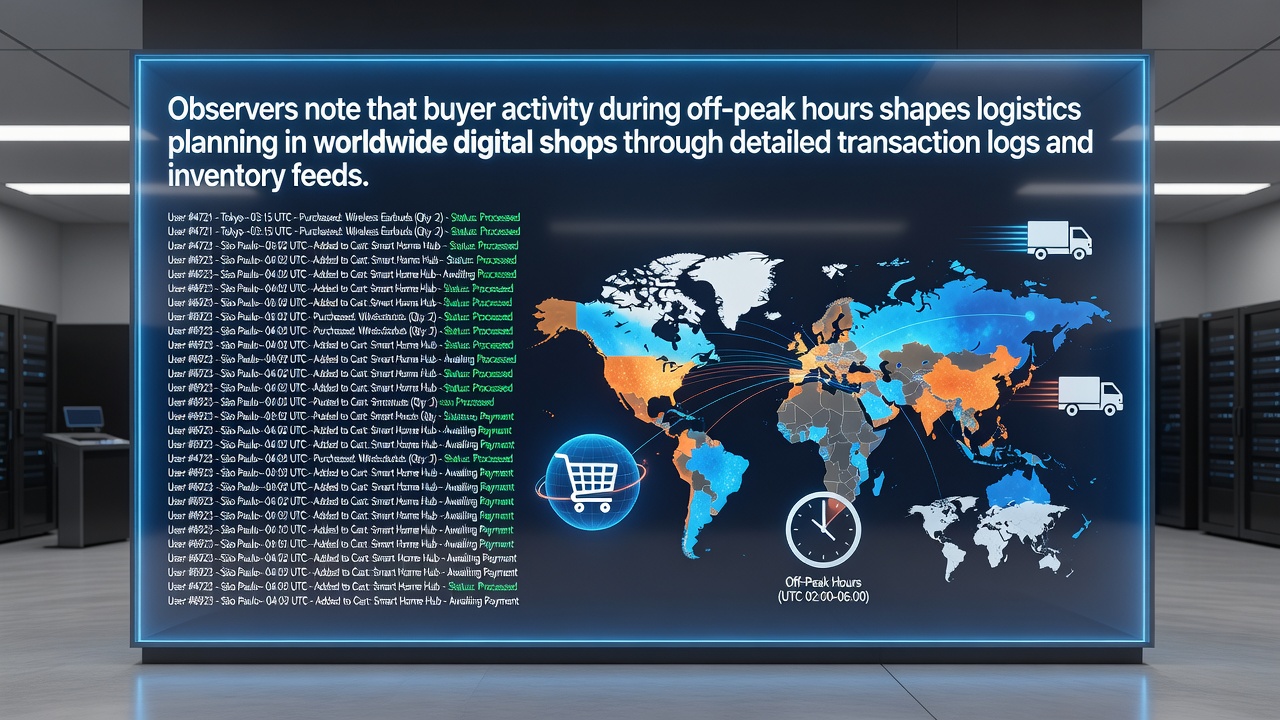
Observers note that buyer activity during off-peak hours shapes logistics planning in worldwide digital shops through detailed transaction logs and inventory feeds, and this process relies on continuous data collection from platforms operating across multiple time zones. Retail systems capture purchase timestamps, product selections, and delivery preferences even when overall volume drops, then feed those records into algorithms that adjust warehouse staffing, carrier schedules, and stock replenishment cycles. Data from October 2026 shows that platforms in North America and Europe recorded measurable shifts in order placement between 10 p.m. and 6 a.m. local time, prompting companies to recalibrate overnight fulfillment capacity rather than maintain uniform daytime-only models.
Transaction Logs as Core Inputs for Planning
Transaction logs record every order detail including item quantity, payment method, and geographic origin, while inventory feeds update stock levels in real time across distribution centers. Together these datasets allow analysts to identify recurring off-peak demand spikes for specific categories such as electronics in Asian markets or groceries in North American suburbs. Researchers at academic institutions have documented how these combined data streams reduce overstock incidents by aligning replenishment with actual purchase timing rather than historical averages alone. One logistics provider in Australia integrated similar feeds and observed a 12 percent drop in expedited shipping costs during low-traffic periods because routes could be pre-positioned based on logged buyer locations.
Regional Variations in Off-Peak Demand
Patterns differ by region because consumer habits and infrastructure vary. In the United States, reports from the Census Bureau indicate that off-peak digital purchases grew steadily through 2026, with evening and early-morning orders concentrated in household essentials and apparel. European platforms, drawing on Eurostat retail statistics, recorded higher volumes of digital media and subscription renewals during comparable hours. Meanwhile, logistics operators in Southeast Asia noted that off-peak activity often clustered around paydays and promotional windows, requiring flexible driver scheduling that transaction logs helped predict weeks in advance. These geographic differences mean global networks must maintain separate planning modules rather than apply a single template across all markets.
Inventory Feed Integration and Warehouse Adjustments
Inventory feeds supply current stock counts from multiple warehouses, allowing planners to reroute orders away from depleted locations before delays occur. When off-peak logs reveal consistent demand for certain SKUs at unusual hours, systems trigger earlier restocking or temporary transfers between facilities. A Canadian fulfillment network reported that combining these feeds with time-stamped transaction data cut average order cycle time by several hours during slower periods. The approach also supports labor allocation because managers can forecast overnight staffing needs without relying solely on daytime sales forecasts. Observers note that this level of granularity becomes especially useful during seasonal transitions when buyer timing shifts unexpectedly.

Case Examples from Multiple Markets
Take one European operator that examined six months of off-peak logs in 2026 and discovered repeated small-bundle orders from specific urban zones after midnight. The company adjusted courier handoff points accordingly, which improved on-time rates without expanding fleet size. In another instance, a platform serving Australian customers used inventory feeds to detect regional stock imbalances that appeared only in overnight transaction records. Adjustments made after reviewing that data prevented backorders during the following month. Similar observations appear in reports from research institutions examining cross-border digital trade, where time-zone differences create natural off-peak windows that logistics teams now treat as predictable rather than anomalous.
Data Volume and Processing Requirements
Handling the volume of logs and feeds demands scalable storage and processing tools capable of handling millions of entries daily. Platforms often employ distributed databases that tag each record with precise timestamps and location identifiers, then run batch analyses during quieter system periods. This setup allows planners to generate daily or weekly summaries that highlight emerging off-peak trends before they affect service levels. Industry groups focused on supply-chain technology have published guidelines on standardizing these data formats so that carriers and warehouses can exchange information across borders without custom integrations for every partner.
Conclusion
Buyer activity during off-peak hours continues to supply actionable signals that worldwide digital shops incorporate into logistics planning through transaction logs and inventory feeds. The resulting adjustments affect staffing, routing, and stock positioning across regions with distinct demand profiles. As platforms refine these methods, the emphasis remains on accurate data capture and timely analysis rather than assumptions about when purchases occur. Continued monitoring of these patterns supports efficient operations even as consumer timing evolves.